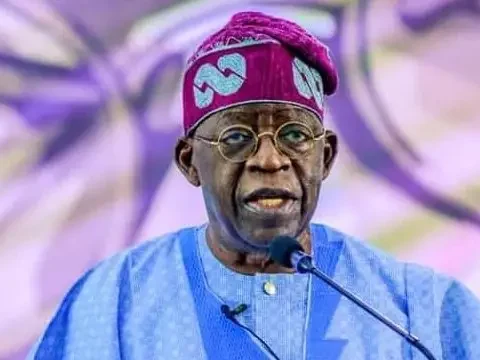
Early Life
Bola Ahmed Adekunle Tinubu was born on March 29, 1952, in Lagos, to a Yoruba Muslim family. His mother, Abibatu Mogaji, was a hugely successful trader who rose to become the Iyaloja of Lagos, the traditional head of the city’s market women, and she lived to the age of 96 before her death on June 15, 2013. Growing up in a family of traders, Tinubu was exposed early to commerce, community leadership and the cut and thrust of Lagos street politics, experiences that shaped his later reputation as a deal-maker.
His date and place of birth have occasionally been a subject of political debate. The year 1952 is widely accepted by reliable sources, but some of his political opponents have argued that he is older, and a few older records and publications have even listed a different year or a different state of birth. The APC’s official biography and most major reference sources state that he was born in Lagos on March 29, 1952, and that is the date and place used in this profile.
Education
Tinubu began his schooling at St. John’s Primary School in Aroloya, Lagos, before moving to the Children’s Home School in Ibadan. In 1975, he travelled to the United States for university education, enrolling first at Richard J. Daley College (then Southwest College) in Chicago, Illinois, and later transferring to Chicago State University.
To pay his way through school, he worked a number of odd jobs, including as a dishwasher, a night security guard and a cab driver. He majored in accounting and management, made the dean’s list, tutored fellow students and served as president of the university’s accounting society in his final year. He graduated in 1979 with a Bachelor of Science degree in Business Administration. His academic record became a subject of controversy during election cycles because of discrepancies in the paperwork he submitted to the electoral commission in the past, although Chicago State University has confirmed his graduation and identity.
Career
Corporate Career
After graduating, Tinubu worked as an accountant for several American firms, including Arthur Andersen, Deloitte and GTE Services Corporation. He also worked as a consultant for a joint venture partner of Saudi Aramco, which he has described as his first major financial breakthrough. He later moved to London, where he was recruited as an auditor for Mobil Oil UK, before returning to Nigeria in the 1980s to join Mobil Producing Nigeria, where he rose to become a senior executive and treasurer.
Entry into Politics and Exile
Tinubu left his well-paid job at Mobil for politics in 1991, joining the Social Democratic Party and throwing his weight behind the presidential bid of M.K.O. Abiola. In 1992, he was elected Senator for Lagos West, where he chaired the Senate Committee on Banking, Finance, Appropriation and Currency. After the annulment of the June 12, 1993 presidential election and the military takeover by General Sani Abacha, Tinubu became a founding member of the National Democratic Coalition (NADECO), faced harassment and threats, and went into exile in 1994, returning to Nigeria in 1998 after Abacha’s death.
Governor of Lagos State (1999 to 2007)
In 1999, Tinubu won the Lagos governorship election on the platform of the Alliance for Democracy (AD) and won re-election in 2003, when he was the only AD governor to survive the sweep by the then ruling PDP in the South-West. His eight years in office were marked by road construction, tax and revenue reforms and a long-running battle with the federal government under President Olusegun Obasanjo over the creation of additional Local Council Development Areas, a dispute that led to the withholding of Lagos local government funds until the Supreme Court ruled in his favour. He was succeeded by his former chief of staff, Babatunde Fashola, in 2007.
Kingmaker and Founder of the APC
After leaving office, Tinubu became the national leader of the Action Congress of Nigeria and played a central role in negotiating the February 2013 merger of the ACN, CPC, ANPP, a faction of APGA and a faction of the PDP into the All Progressives Congress. The new party defeated the sitting PDP government in 2015 when Muhammadu Buhari became president, the first time an incumbent Nigerian president lost to an opposition candidate. Tinubu’s influence in picking governors and appointing political allies in Lagos earned him the “Godfather of Lagos” tag.
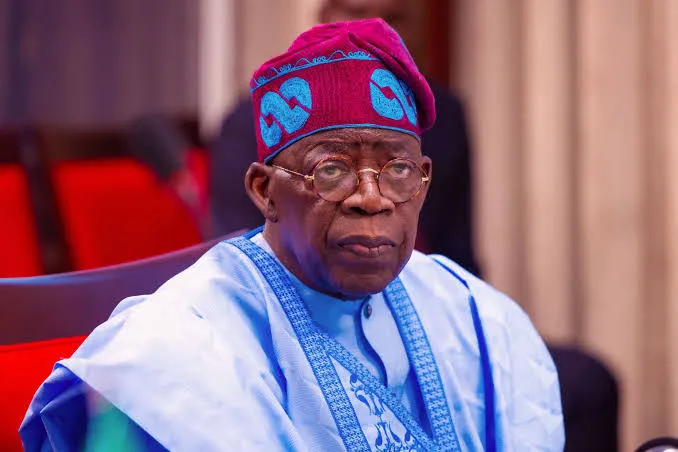
The 2023 Presidential Election
Tinubu declared his presidential ambition on January 10, 2022, and won the APC presidential primary on June 8, 2022, defeating Vice President Yemi Osinbajo and Rotimi Amaechi. On March 1, 2023, the Independent National Electoral Commission declared him winner of the presidential election with 8,794,726 votes, ahead of Atiku Abubakar of the PDP and Peter Obi of the Labour Party. He won with about 36.6 percent of the vote, one of the lowest winning percentages in Nigerian history, and the opposition rejected the outcome over alleged irregularities and the failure to upload results in real time to the INEC portal. He was sworn in on May 29, 2023.
First Term as President
In his inaugural address, Tinubu announced the end of the fuel subsidy, which had been costing the government billions of dollars annually, a move that sent petrol prices soaring and triggered public anger. Within weeks, the Central Bank allowed the naira to float, and he suspended central bank governor Godwin Emefiele and EFCC chairman Abdulrasheed Bawa. He appointed Nuhu Ribadu as National Security Adviser and overhauled the leadership of the armed forces. His supporters credit these reforms with stabilising the economy and increasing government revenue, while critics point to high inflation, a weaker naira and a deep cost-of-living crisis.
Other notable moments of his presidency include his readoption of “Nigeria, We Hail Thee” as the national anthem in May 2024, the declaration of a state of emergency in Rivers State in 2025, which drew heavy criticism from constitutional lawyers, and an alleged coup plot uncovered in October 2025 that led to the arrest of 16 military officers and a change of service chiefs. In late 2025, Nigeria deployed forces to support the government of neighbouring Benin during a coup attempt, and on December 25, 2025, the United States carried out a strike against Islamic State fighters in northwest Nigeria at the request of his administration, the first foreign military action of its kind since independence.
Latest News on Bola Tinubu (2026 Updates)
Here is a month-by-month summary of the biggest developments around President Tinubu in 2026:
- January 2026: The new tax reform laws took effect at the start of the year. On January 8, Tinubu awarded the national honour of Grand Commander of the Order of the Niger (GCON) to businessman Gilbert Chagoury, a decision that drew criticism. The military also submitted its report on the alleged October 2025 coup plot to the president.
- February 2026: INEC issued the formal Notice of Election on February 13. On February 18, Tinubu signed the Electoral Act 2026, after which INEC moved the presidential and National Assembly elections forward to January 16, 2027, with governorship and state assembly elections set for February 6, 2027.
- March 2026: Tax expert Taiwo Oyedele was confirmed and sworn in as Minister of State for Finance. Tinubu also held talks with UK Prime Minister Keir Starmer in London on March 19.
- April 2026: On April 21, Tinubu approved a minor cabinet reshuffle, removing Finance Minister Wale Edun and Housing Minister Ahmed Musa Dangiwa. Oyedele was elevated to Minister of Finance and Coordinating Minister of the Economy, while Muttaqha Rabe Darma was nominated as housing minister.
- May 2026: Tinubu travelled to France in early May to meet global investors and defend his reforms. On May 23, the APC held its first nationwide direct presidential primary, and Tinubu won with about 10.99 million votes against rival aspirant Stanley Osifo. He was presented with the certificate of return and party flag on May 24, and the country marked three years of his administration on May 29.
- June 2026: In his Democracy Day speech on June 12, Tinubu announced national honours for people who suffered persecution, exile and detention in the struggle for democracy.
- July 2026: The APC formally confirmed Vice President Kashim Shettima as Tinubu’s running mate, ending months of speculation that he could be dropped from the ticket.
- September 2026: INEC published its final list of 18 presidential candidates. Tinubu and Shettima are on the APC ticket, while former Vice President Atiku Abubakar is running on the ADC platform with Rotimi Amaechi as running mate, and Peter Obi is contesting under the Nigeria Democratic Congress (NDC).
- October 2026: Tinubu flagged off his re-election campaign in Kaduna on October 24, blaming opposition parties for hunger and poverty in the country.
- November 2026: At the 40th Lagos International Trade Fair, Tinubu said Nigeria’s gross external reserves rose to about $55.07 billion in October 2026, the highest in 18 years, and that inflation fell to 14.63 percent in September with economic growth of 4.43 percent in the second quarter. On November 9, the APC released a cost-of-living plan promising to curb inflation, nearly double peak electricity generation and increase food supply. On November 10, he urged young Nigerians to reject ethnic, religious and political divisions.
Awards and Nominations
Over the years, Bola Ahmed Tinubu has received a number of national and international honours and titles, including:
- Grand Commander of the Order of the Federal Republic (GCFR), conferred on May 25, 2023
- Best Governor in Nigeria for 2000 by the Nigerian-Belgian Chamber of Commerce
- 2002 Best Practices Prize for improving the living environment, awarded by the Federal Ministry of Works and UN-Habitat
- 2000 Best Computerized Government in Nigeria Award by the Computer Association of Nigeria
- Honorary Doctor of Law degree from Abia State University
- Knight Commander of the Order of Saint Lucia (KCOSL), the highest national honour of Saint Lucia, received during a state visit to the Caribbean nation in 2025
- Traditional titles: Asiwaju of Lagos and Jagaban of Borgu in Niger State
Social Media
President Tinubu’s official handle on X (formerly Twitter) is @officialABAT, which he uses to announce policy decisions, congratulate Nigerian sports teams and share his meetings with world leaders. A 2025 report by the communications firm Column found that he commands the largest online audience in the Nigerian cabinet, with about 4.5 million combined followers across major platforms, representing more than a quarter of the cabinet’s total social media reach. The presidency also runs separate official pages on Facebook, Instagram and other platforms.
Personal Life
Tinubu married Oluremi Tinubu in 1987. She is a pastor, a former Senator for Lagos Central and the current First Lady of Nigeria. Together they have three daughters: Zainab Abisola, Habibat and Olayinka. Tinubu also has three children from previous relationships: Kazeem Olajide (popularly called Jide), who was born in 1974 and died in London on October 31, 2017, Folashade, born in 1976, and Oluwaseyi, born in 1985. His appointment of his son-in-law, Oyetunde Oladimeji Ojo, as head of the Federal Housing Authority in February 2024 drew accusations of nepotism.
Tinubu is a Muslim, and his decision to retain Vice President Kashim Shettima, also a Muslim, as his 2027 running mate means the APC is again fielding a Muslim-Muslim ticket, which has been a talking point in the political debate.
Controversies
Tinubu’s long career has not been free of controversy. In 1993, United States authorities froze assets in connection with a narcotics investigation, and he later settled with the U.S. government and forfeited about $460,000. In the 2000s, he faced Code of Conduct Bureau proceedings over foreign bank accounts, and in 2009 the EFCC cleared him in connection with the sale of Vmobile shares. His educational records, his age and the source of his wealth have also been repeatedly questioned by opponents. In 2019, he drew attention when a bullion van was seen entering his residence in Ikoyi, after which he said he could keep money wherever he wanted. More recently, critics have attacked the economic hardship that followed the subsidy removal, the Rivers State emergency rule, and the award of a national honour to Gilbert Chagoury in January 2026.
Net Worth
There is no verified figure for Bola Tinubu’s net worth. Unlike billionaires tracked by Forbes and Bloomberg, he does not appear on global rich lists, and he has not publicly released a detailed asset declaration. Various websites circulate estimates ranging from hundreds of millions to several billion dollars, but none of these figures can be independently confirmed. His known income sources include his earlier career as an accountant and corporate executive at Mobil, his time as governor and his current salary as President of Nigeria. In December 2025, Tinubu approved a big increase in the budget of the Code of Conduct Bureau, from about N3 billion to nearly N20 billion, to support an AI-driven asset declaration system.
Political Milestones Timeline
- 1992: Elected Senator for Lagos West
- 1994 to 1998: Lived in exile as a NADECO activist
- 1999 to 2007: Governor of Lagos State
- 2013: Helped found the All Progressives Congress
- 2022: Won the APC presidential primary
- 2023: Elected and sworn in as the 16th President of Nigeria
- 2023 to date: Serves as the Minister of Petroleum Resources, in addition to his role as President
- 2026: Won the APC direct primary and is the party’s candidate for the January 16, 2027 election
Frequently Asked Questions (FAQs)
How old is Bola Tinubu?
Bola Ahmed Tinubu was born on March 29, 1952, which makes him 74 years old as of November 2026.
Who is Bola Tinubu’s wife?
His wife is Senator Oluremi Tinubu, the First Lady of Nigeria and a former Senator for Lagos Central. They married in 1987.
How many children does Bola Tinubu have?
Tinubu has six children, three with his wife Oluremi and three from previous relationships. One of them, Jide, died in 2017.
Where did Bola Tinubu go to school?
He attended St. John’s Primary School in Lagos and the Children’s Home School in Ibadan, then studied at Richard J. Daley College and Chicago State University in the United States, graduating in 1979.
Is Bola Tinubu running for re-election in 2027?
Yes. He won the APC presidential primary in May 2026 and is on the final INEC list of candidates with Vice President Kashim Shettima as his running mate. The presidential election is scheduled for January 16, 2027.
Who are Tinubu’s main challengers in the 2027 election?
The two best-known challengers are former Vice President Atiku Abubakar of the ADC and former Anambra governor Peter Obi of the NDC, who finished second and third in 2023. INEC’s final list has 18 presidential candidates in total.
What is Bola Tinubu’s net worth?
There is no verified figure. Estimates found online vary widely and are not backed by public asset declarations.
Conclusion
From a trader’s son in Lagos to a Chicago-trained accountant, from a pro-democracy exile to governor, kingmaker and now president, Bola Ahmed Tinubu’s life story is one of the most remarkable in modern Nigerian politics. His first term has been defined by bold, painful economic reforms, and the January 16, 2027 election will be a referendum on whether Nigerians believe those reforms are working. Whether admired or criticised, Tinubu remains one of the most consequential figures in Nigeria’s political history, and this page will be updated as the campaign and the election develop.

Comments 2
Mr president
Baba T