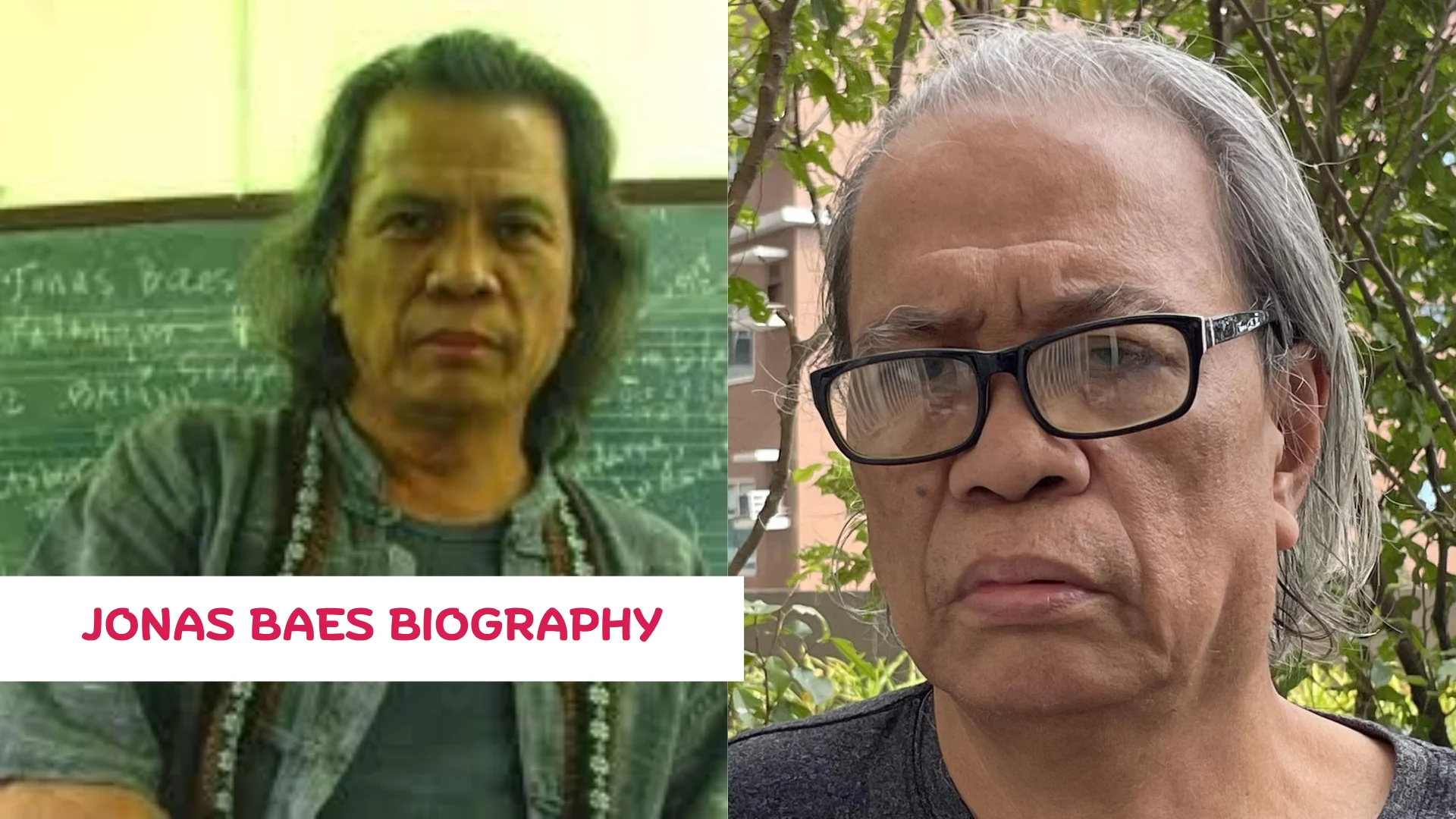
Profile
| Full name | Jonas U. Baes |
|---|---|
| Born | 1961, Los Baños, Laguna, Philippines |
| Nationality | Filipino |
| Occupations | Composer, ethnomusicologist, writer, academic |
| Position | Professor, Composition and Theory Department, UP Diliman College of Music |
| Known for | Patangis-Buwaya; research on the Iraya-Mangyan of Mindoro; founding the Manila Composers Lab |
Early Life, Martial Law and Protest Music
Baes was born in 1961 in Los Baños, Laguna. His older brother, Aloysius “Ochie” Baes, was a student leader who founded a chapter of the Samahang Demokratiko ng Kabataan at the University of the Philippines Los Baños and was arrested after President Ferdinand Marcos declared martial law in 1972; Jonas has recalled carrying his brother’s music sheets with him on prison visits. While studying music at UP Diliman beginning in 1977 under composer Ramon P. Santos, Baes was active in Tulisanes, a protest music collective based at UP Los Baños, commuting between the two campuses. He went on to contribute to Patatag, a protest-folk group, producing its third and final album, “Masdan, O Yahweh,” as the 1980s came to a close.
Ethnomusicology and the Iraya-Mangyan
Baes’s scholarship centers on the music of the Iraya-Mangyan people of Mindoro and the Dumagat of Rizal province, work he has published in international peer-reviewed journals with a focus on what he has called the cultural politics and sociology of loss in music. That research directly shaped his compositional practice: his most widely performed piece, Patangis-Buwaya (2003), written for four sub-contrabass recorders or similar wind instruments, draws on Iraya-Mangyan narratives of displacement and the exploitation of their ancestral lands, and has been read internationally as a statement on indigenous rights and the threats facing rainforest communities.
A Distinctive Compositional Voice
Across a body of work beginning in the early 1980s, Baes developed a style built on unorthodox sound sources, including bean-pod rattles, palm leaves, iron-nail chimes, bamboo scrapers and bamboo flutes, often alongside Asian vocal techniques. His early-1980s works, such as PANTAWAG (1981) and BASBASAN (1983), were shaped by composer José Maceda’s use of large sound-mass ensembles; in the 1990s, pieces including DALUY (1994) and IBO-IBON (1996) incorporated audience participation, with concertgoers handed bird whistles or nail chimes to play as part of the performance. Around 2000, his work increasingly engaged the sociological theory of structure and agency associated with Anthony Giddens and the concept of simulacrum from Jean Baudrillard. From 1992 to 1995, he undertook special studies in composition at the Staatliche Hochschule für Musik Freiburg in Germany under Mathias Spahlinger, an influence he later examined at length in his 2022 book.
Academic Career and Institutions Founded
Baes earned a Bachelor of Music in composition from UP in 1982, pursued graduate units in musicology there from 1982 to 1985, and completed a PhD in Philippine Studies at UP Diliman in 2004. He has held fellowships including the Asian Public Intellectuals Fellowship, the Salzburg Global Fellowship, and an Association of Pacific Rim Universities fellowship at UNAM in Mexico City, and has served as a guest professor in Germany, Japan and Malaysia. In 2009, he founded and continues to direct the Manila Composers Lab, an annual workshop bringing young composers, particularly from Southeast Asia, together with international experts and ensembles; the lab marked its tenth anniversary in 2019. In 2015, he co-founded Ripieno Ensemble PH, aimed at developing a distinctly local modernity within Philippine contemporary music. He has received the University of the Philippines’ Artist Productivity System award at Artist Rank 2 across multiple cycles, and was inducted into the UP Gawad Chancellor para sa Pinakamahusay na Mananaliksik Hall of Fame in 2003.
Recent Publication
In 2022, the University of the Philippines Press published Baes’s book Maceda, Spahlinger and the Dialectics of a “New Music” Praxis in Southeast Asian Modernity, examining the influence of his two most formative composition teachers, José Maceda and Mathias Spahlinger, on his own practice and on contemporary music in the region more broadly.
Independent, up-to-date reporting on Baes’s activities in the most recent one to two years is limited; this article draws on the fullest publicly available sourcing, including his university faculty profile and prior interviews, and no verified information about developments since the 2022 publication of his book was found at the time of writing.
Career Timeline
| Date | Milestone |
|---|---|
| 1961 | Born in Los Baños, Laguna |
| 1977 | Enrolls at the UP College of Music, studying under Ramon P. Santos |
| 1982 | Earns Bachelor of Music in composition from UP |
| 1992–1995 | Undertakes special studies in composition under Mathias Spahlinger in Freiburg, Germany |
| 2003 | Premieres Patangis-Buwaya, later performed annually worldwide; earns his PhD in Philippine Studies from UP Diliman |
| 2009 | Founds the Manila Composers Lab |
| 2015 | Co-founds Ripieno Ensemble PH |
| 2019 | Manila Composers Lab marks its tenth anniversary |
| 2022 | Publishes Maceda, Spahlinger and the Dialectics of a “New Music” Praxis in Southeast Asian Modernity with UP Press |
Sources
- Wikipedia — Jonas Baes
- UP College of Music — Jonas U. Baes Faculty Profile
- University of the Philippines — UP’s Tradition of Protest Music
- Jeff von der Schmidt — The 10th Anniversary of the Manila Composers Lab in the Philippines




Comments 0