 11
11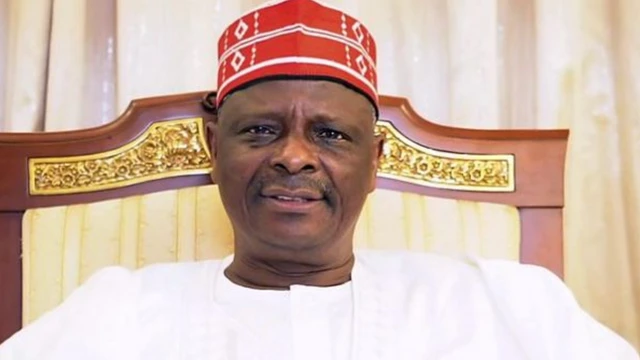
In the space of six weeks in early 2026, Rabiu Kwankwaso left the party he had founded, joined a different one, and then left that one too.
By May 2026, he had settled on the ticket he now shares with Peter Obi as the Nigeria Democratic Congress’s vice-presidential candidate for the 2027 election. It is the latest turn in a political career that stretches back more than three decades and has twice made him Governor of Kano State.
Rabiu Musa Kwankwaso is a Nigerian politician and engineer who served two terms as Governor of Kano State, one term as Nigeria’s Minister of Defence, and one term as a senator, before founding his own party and running for president in 2023.
He is widely known in northern Nigeria as the leader of the Kwankwasiyya movement, a mass political and social base built during his time in office.
| Born | October 21, 1956, Kwankwaso village, Madobi, Kano State, Nigeria |
|---|---|
| Nationality | Nigerian |
| Occupation | Politician, civil engineer |
| Party | Nigeria Democratic Congress (as of 2026) |
| Known for | Two-term Governor of Kano State; founder of the Kwankwasiyya movement; 2023 presidential candidate; 2027 NDC vice-presidential candidate |
| Spouse | Salamatu Rabiu Musa |
| Children | 6 |
Kwankwaso trained as a civil engineer, studying at Kaduna Polytechnic before further studies in the United Kingdom at Middlesex Polytechnic and Loughborough University of Technology.
He entered elected politics in 1992, winning a seat representing Madobi in the House of Representatives and rising to Deputy Speaker before Nigeria’s Third Republic was cut short by military intervention.
He returned to politics under the restored democracy of 1999, winning election as Governor of Kano State on the platform of the Peoples Democratic Party (PDP) and serving a first term from 1999 to 2003.
After leaving the governorship, Kwankwaso was appointed Nigeria’s Minister of Defence under President Olusegun Obasanjo, serving from 2003 to 2007. He returned to Kano politics and was elected governor for a second time, serving from 2011 to 2015.
That second term is the period most associated with the Kwankwasiyya movement, a mass base named for him and symbolised by a distinctive red cap, built around free and subsidised education policies, including scholarships and mass enrolment drives that supporters credit with expanding access to schooling in the state.
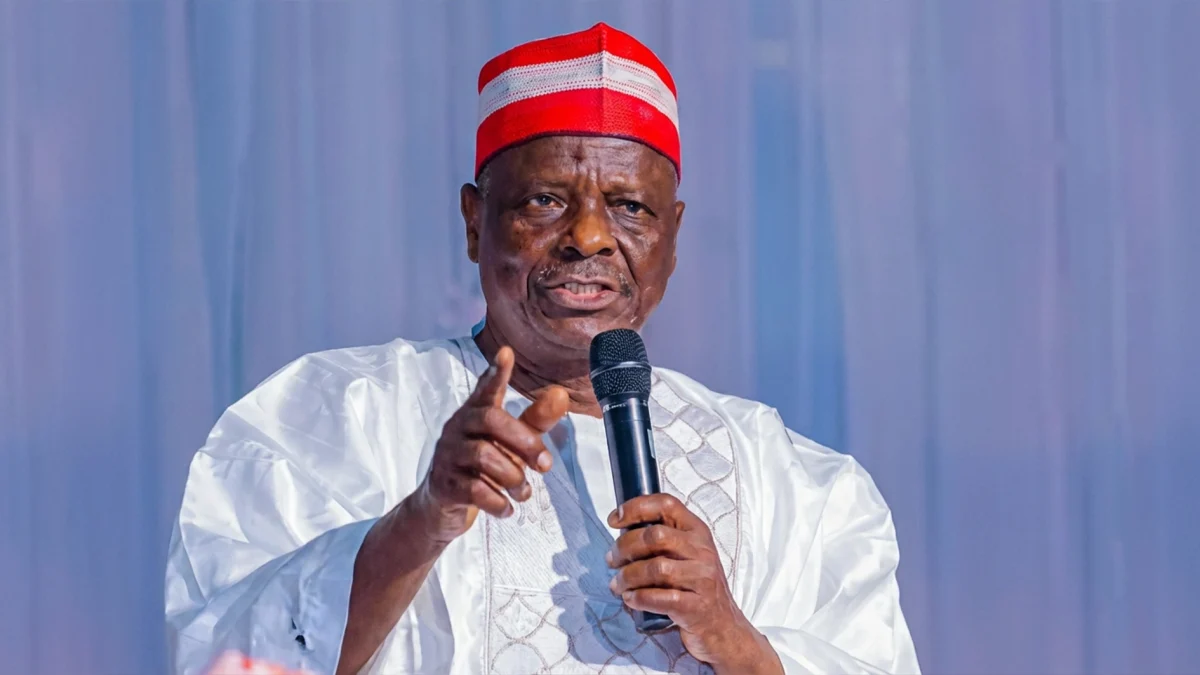
Kwankwaso was elected to represent Kano Central in the Senate in 2015, serving until 2019.
In 2022, after years moving between the PDP and the All Progressives Congress (APC), he founded the New Nigeria Peoples Party (NNPP) and became its presidential candidate for the 2023 general election.
According to results confirmed by Nigeria’s electoral commission and reported by Wikipedia‘s election tables, Kwankwaso finished fourth nationally with 1,496,687 votes, or about 6.4% of the total, behind Bola Tinubu, Atiku Abubakar and Peter Obi.
He nonetheless won his home state of Kano outright, polling 997,279 votes there against Tinubu’s 517,341, and the NNPP’s Abba Kabir Yusuf, his political protégé, was elected governor of the state the same year.
Accepting the NNPP’s nomination in June 2022, Kwankwaso told party delegates in a pledge reported by The ICIR, “I will do whatever it takes from my side.”
Kwankwaso’s relationship with his own party and his protégé unravelled in early 2026.
On January 23, 2026, Governor Abba Kabir Yusuf announced his resignation from the NNPP, and defected formally to the ruling APC three days later, on January 26.
Kwankwaso, in his first interview after the split, told the BBC he was disappointed that Yusuf had handed the party’s mandate in Kano to a rival political camp without, in his view, sufficient justification.
Kwankwaso’s own realignment followed swiftly. He resigned from the NNPP on March 29, 2026, and the next day, March 30, formally registered with the African Democratic Congress (ADC) at his Miller Road residence in Kano, in a ceremony attended by former Vice President-aligned opposition figures including David Mark, Aminu Tambuwal and Peter Obi. The ADC had emerged the previous year as an umbrella coalition for Tinubu’s leading opponents ahead of 2027.
That arrangement did not last either: on May 3, 2026, Kwankwaso and Obi both left the ADC together to join the newly formed Nigeria Democratic Congress (NDC), a move ADC leaders said risked splitting the anti-APC opposition vote.
By the middle of 2026, reports were circulating that Obi intended to name Kwankwaso as his running mate on the NDC ticket, a move confirmed later in the year. As of September 2026, Kwankwaso is the NDC’s vice-presidential candidate, with the party’s presidential campaign council in the process of being formally inaugurated.
Kwankwaso has said the position could put Kano State in a position to produce a Nigerian vice president for the first time, and has argued that a win in 2027 could position him as a future presidential contender in his own right.
The joint ticket has not been without friction. In a mid-September interview on Arise Television, Kwankwaso said an NDC government would reverse the removal of fuel subsidy and reintroduce it “in a different form,” telling the network, “We will bring back subsidy in our own way.”
The statement put him at odds with Obi, who has publicly maintained since 2023 that the subsidy should stay removed; both the NDC and Obi’s camp subsequently said in separate interviews that they backed Kwankwaso’s proposal, according to The Punch.
Separately, Kwankwaso used a BBC Hausa interview published on September 21, 2026, to again extend an offer of reconciliation to Governor Yusuf, saying he had not asked Yusuf to leave and still held him in regard.
Kwankwaso has faced a long-running, unresolved investigation by Nigeria’s Economic and Financial Crimes Commission (EFCC) stemming from his second term as governor.
Following a petition filed by Kano State pensioners and retirees, the EFCC has, at various points since 2015, questioned Kwankwaso over allegations that funds intended for pension payments and a related housing scheme, reported variously as around N2.5 billion and N10 billion, were mismanaged and that houses meant for pensioners were instead allocated to associates.
Kwankwaso has voluntarily reported for questioning on more than one occasion and has denied any wrongdoing; his allies have characterised the long-running probe as politically motivated. A spokesman for the NNPP’s youth wing dismissed the investigation at the time, telling The Cable, “I challenge EFCC to come out with facts on the allegations.” As of the most recent reporting reviewed for this article, from September 2025, the case remained under investigation, with no criminal charges brought against Kwankwaso.
Kwankwaso is married to Salamatu Rabiu Musa and has six children.
His son-in-law, Abba Kabir Yusuf, was elected Governor of Kano State in 2023 with Kwankwaso’s backing before the two men’s political split in 2026, described above.
| Position | Dates |
|---|---|
| Member, House of Representatives (Madobi) | 1992–1993 |
| Deputy Speaker, House of Representatives | 1992–1993 |
| Governor of Kano State (1st term) | 1999–2003 |
| Minister of Defence | 2003–2007 |
| Governor of Kano State (2nd term) | 2011–2015 |
| Senator for Kano Central | 2015–2019 |
| NNPP Presidential Candidate | 2023 |
| NDC Vice-Presidential Candidate | 2026–present |
| Date | Development |
|---|---|
| January 23, 2026 | Governor Abba Kabir Yusuf resigns from the NNPP |
| January 26, 2026 | Yusuf formally defects to the APC |
| January 28, 2026 | Kwankwaso gives his first interview on the split, telling the BBC he is disappointed |
| March 29, 2026 | Kwankwaso resigns from the NNPP |
| March 30, 2026 | Kwankwaso formally joins the African Democratic Congress (ADC) in Kano |
| May 3, 2026 | Kwankwaso and Peter Obi leave the ADC to join the Nigeria Democratic Congress (NDC) |
| Mid-2026 | Reports emerge that Obi intends to name Kwankwaso as his running mate |
| September 2026 | Kwankwaso is confirmed as NDC vice-presidential candidate; campaign council formation begins; public disagreement with Obi over fuel subsidy policy emerges |
Last updated: September 24, 2026
Zeez is the editor and founder of BioOrbit, where he researches and writes biographies of public figures from Nigeria and around the world. With 5 years of experience writing about news, entertainment, sports and politics, Zeez focuses on verified facts, clear sourcing and regular updates. Found an error? Report a correction.